Access Restricted
Your access to this website is restricted.
Our website and services are not available to, and are not intended for, individuals who are citizens or residents of the United States, or entities incorporated in or conducting business within the United States.
If this does not apply to you and you believe you have received this message in error, please contact us at [email protected] for further assistance.
If you fall into any of the above categories, please exit the site.
Important Information
Thank you for visiting the Vantage Markets website. Please note that this website is intended for individuals residing in jurisdictions where accessing it is permitted by Vantage and its affiliated entities do not operate in your home jurisdiction.
By clicking 'I CONFIRM MY INTENTION TO PROCEED AND ENTER THIS WEBSITE', you confirm that you are entering this website solely based on your initiative and not as a result of any specific marketing outreach. You wish to obtain information from this website based on reverse solicitation principles, in accordance with the applicable laws of your home jurisdiction.
I CONFIRM MY INTENTION TO PROCEED AND ENTER THIS WEBSITErow

Language
SEARCH
-
AllTradingPlatformsAcademyAnalysisPromotionsAbout
-
Search query too short. Please enter a full word or phrase.
-
Keywords
- Forex Trading
- Vantage Rewards
- Spreads
Popular Search
- Trading Accounts
- MT4
- MT5
- Copy Trading
- Promotions
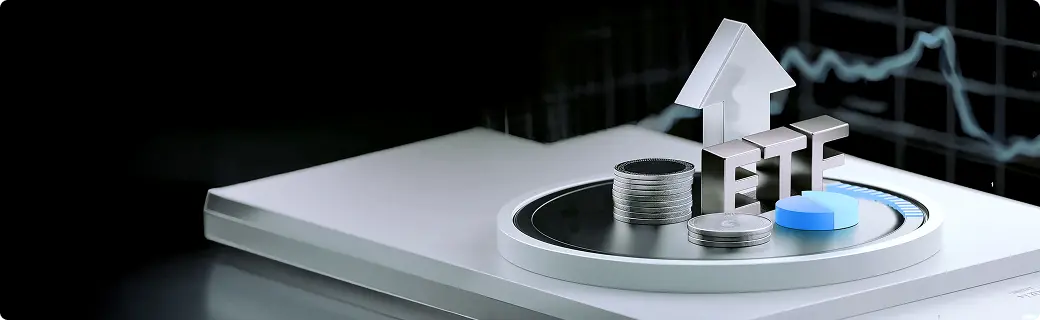
An exchange-traded fund (ETF) is a basket of pooled trading products—such as stocks, commodities, or bonds—designed to replicate the performance of a market index like the S&P 500 or DAX. Unlike mutual funds, ETFs can be traded on the stock exchanges like individual stocks, providing greater flexibility and real-time pricing for traders.
How Does ETF Trading Work?
ETFs trade on exchanges just like individual stocks, offering real-time pricing, liquidity, and the flexibility to buy and sell throughout the trading day. However, instead of representing ownership in a single company, each ETF share reflects a stake in a professionally curated portfolio—whether it’s a basket of stocks, bonds, commodities, or other assets.
When you invest in an ETF, you’re buying into a fund that mirrors the performance of its benchmark, such as the S&P 500, Nasdaq-100, or gold prices. While you can profit from price movements, you don’t directly own the underlying assets. Instead, the ETF structure enables your returns to closely track the benchmark, combining the flexibility of stock trading with the diversification benefits of a mutual fund.
To learn more about the mechanics of ETF investing, visit our How to Trade ETF guide.
Features Of Trading ETFs
ETFs offer a blend of flexibility, efficiency, and accessibility, making them a preferred instrument for a wide range of market participants. Key features include:
- Broad Market Exposure: ETFs provide instant access to diversified portfolios, including equities, fixed income, commodities, and alternative assets through a single transaction.
- Intraday Tradability: Unlike traditional mutual funds, ETFs can be bought and sold at market prices during trading hours, enabling real-time execution.
- Cost Efficiency: With generally lower expense ratios than actively managed funds, ETFs help minimise operational costs while maintaining market-mirroring performance.
- Portfolio Transparency: Most ETFs disclose their holdings daily, allowing investors to monitor underlying assets and manage risk exposure.
Why Trade Commodities With Vantage?
-
Accessibility to
see more
Popular ETFsSpeculate on ETF prices of over 50+ global ETFs by trading CFDs through our liquid global stock exchange markets.
-
Tight Spreads On
see more
RAW ECN AccountsWith competitive spreads from 0.0, trade the world’s most traded ETFs products at minimum cost.
-
Trade
see more
On The GoBuy and sell anytime. React swiftly to news on our trading platform and mobile app.
-
Low & Transparent
see more
CostsExplore the potential of taking both long and short positions across a variety of CFD products, starting from just $0 per trade. Learn about our competitive commission fees by visiting our "All Instruments" page.
-
Free Educational
see more
MaterialsEquip yourself with ETFs trading knowledge through free educational materials on our academy.
-
Trade Bear & Bull
see more
MarketsFlexibility to trade in both rising and falling ETFs markets.
-
Risk Management
see more
ToolsVantage offers negative balance protection, price alerts and stop loss tools to help you manage your downside risk.
-
MT4 & MT5
see more
AccountGet access to ETFs markets with powerful MetaTrader 4 and MetaTrader 5 trading platforms.
Spreads For Popular ETF CFDS
|
Instrument |
|---|
|
ARKB ARK 21Shares Bitcoin ETF |
|
BITB Bitwise Bitcoin ETP Trust |
|
BTCO Invesco Galaxy Bitcoin ETF |
|
GDXJ VanEck:Jr Gold Miners |
|
IBIT iShares Bitcoin Trust |
|
IWM iShares Russell 2000 Index Fund |
|
SPY SPDR S&P 500 ETF Trust |
|
USO United States Oil Fund LP |
|
XLK Technology Select Sector SPDR Fund |
|
XOP SPDR S&P Oil and Gas Exploration and Production |
SEE ALL PRODUCTS
How to Trade ETF CFDs With Vantage
-
1
Open a Live Account
Sign up with Vantage and verify your account.
-
2
Deposit Funds
Securely add funds to your trading account using multiple payment options.
-
3
Analyse ETF Markets
Gain insights with Vantage’s advanced tools and charts to identify potential ETF CFDs to trade.
-
4
Open & Monitor Your First Trade
Place your first order by speculating on the price movements of ETF CFDs—buy (long) or sell (short).
-
5
Close Your Position to Complete the Trade
Exit your trade to realise potential gains or manage risk.
Explore More About ETF Trading
-
What is an ETF
Learn about the different types of ETFs and how to trade them.
-
How to Trade ETF CFDs
Learn about popular ETFs and key market drivers and grasp how to trade ETF CFDs.
-
Why Trade ETF CFDs
Discover why you should diversify your portfolio with ETFs and the top ETFs to watch for.
-
ETF Trading Strategies
Discover various ETF CFD trading strategies that can help improve your trading skills.

Award-Winning Broker
-
Best CFD
BrokerGlobal Brands Magazine
-
Best Multi-
Asset BrokerGlobal Business and Finance Magazine
-
Best CFD
Trading PlatformInternational Business Magazine
Trade ETF CFDs On Different Types Of Trading Platforms
MetaTrader 4
- 30 Built-in technical indicators
- 31 Analytical Charting Tools
- 9 Time-Frames
- 4 Types of trading orders
MetaTrader 5
- 38 Built-in technical indicators
- 44 Analytical Charting Tools
- 21 Time-Frames
- 6 Types of trading orders
TradingView
- 15+ chart types
- 100+ in-built indicators
- 50+ Drawing tools
- 12 alert conditions
Vantage Mobile App
- 55 Deposit Methods Globally
- 220+ Daily Product Analysis
- 16 TradingView Indicators
- 80,000+ Copy Traders
Choose a Trading Account Based on Your Experience Level
-
1
Beginner Traders
For beginner traders looking for direct market access with no commissions.
- Tight spreads from 1.1 pip.
- No extra commissions on trading volume.
-
2
Experience Traders
Offering seasoned traders razor-sharp spreads, low commissions, and deep liquidity.
- Tight spreads from 0.0 pip.
- Commisssions from USD$3.00 per standard lot, per side.
-
3
Professional Traders
For professional traders and money managers who trade large volumes.
- Tights spreads from 0.0 pip.
- Commissions from USD$1.50 per standard lot, per side.

-
1
Register
Quick and easy account opening process.
-
2
Fund
Fund your trading account with an extensive choice of deposit methods.
-
3
Trade
Trade with spreads starting as low as 0.0 and gain access to over 1,000+ CFD Instruments.
Frequently Asked Questions
-
1
Are ETFs good for beginners?
ETFs can be good for beginners as they offer numerous advantages, including diversification and a wide range of investment choices, typically at low cost. This makes ETFs suitable for various trading strategies used by new traders and investors.
The unique structure of ETFs combines the benefits of mutual funds and individual stocks, making them versatile and accessible.
With Vantage, you can open a live trading account and start trading ETFs via CFDs.
-
2
Is it good to trade an ETF?
Trading ETFs can be advantageous for traders and investors due to several reasons.
Firstly, ETFs provide instant diversification by offering access to a product that has pooled together multiple securities, spreading risk.
They also offer liquidity as they can be bought or sold throughout the trading day at market prices. ETFs are transparent, with daily disclosure of their holdings, allowing traders to make informed decisions. Moreover, they often have lower costs compared to mutual funds, reducing fees and potentially improving long-term returns.
ETFs also provide flexibility, covering various investment themes and asset classes. However, it's important to be aware of associated risks and conduct thorough research before trading ETFs.
-
3
Are ETFs better than stocks?
Both ETFs and stocks have their own advantages and considerations. ETFs offer diversification, flexibility, and the ability to invest in a specific market or sector.
On the other hand, individual stocks provide the potential for higher returns but also come with more risk. The choice between ETFs and stocks ultimately depends on your trading goals, risk tolerance, and personal preferences.
Many traders choose to have a mix of both in their portfolios to balance risk and reward.
-
4
What are the types of ETFs?
There is a wide range of ETFs available to suit various trading preferences. Here are the few common types of ETFs traded:
Equity ETFs, or stock ETFs: These track a specific stock market index, such as the S&P 500, and provide exposure to a broad range of stocks.
Bond ETFs: These focus on fixed-income securities like government or corporate bonds, offering potential income generation and diversification.
Sector ETFs: These target specific industry sectors, allowing investors to focus on a particular area of the market, such as technology or healthcare.
Commodity ETFs: These provide exposure to commodities like gold, oil, or agricultural products, offering a way to diversify beyond traditional asset classes.
Country/Region-based ETFs: ETFs that focus on securities in a country or geographical region. These can range from ETFs based around mature economies to ones that track emerging markets.
-
5
What do I need to know before trading ETFs?
Trading ETFs, like any trading decision, involves potential benefits and risks that should be carefully considered.
Understanding the nature of the ETF market and the various factors that can cause values to fluctuate is important. It's recommended to thoroughly research your trading options and possibly seek advice from a financial advisor or professional before engaging in ETF trading.
You can also visit our library of free educational materials and articles to help improve your understanding before you begin trading ETFs.
-
6
ETFs vs. Mutual Funds: What’s the Difference?
While both ETFs and mutual funds offer diversified exposure to various assets, ETFs are traded on exchanges like stocks and can be bought or sold throughout the trading day. ETFs also tend to offer greater transparency, lower costs, and more flexibility—especially for active traders.
Mutual funds, on the other hand, are priced once daily and typically involve higher fees and minimum investment requirements.
-
7
What Are the Risks of Trading ETFs?
Trading ETFs involves market risk, as their value can fluctuate based on the performance of underlying assets. Liquidity risk may also arise if the ETF is thinly traded, making it harder to enter or exit positions efficiently.
Additionally, leveraged and inverse ETFs carry higher risk due to their complexity and potential for amplified losses. As with any investment, thorough research and risk management are essential.
Promotions & Resources
-
Vantage Rewards
Earn V-Points with every trade you make, and redeem exclusive vouchers. Join Vantage Rewards Today!
-
Deposit Bonus
Boost your trades – Double your deposit with our 50% bonus offered for new deposits!
-
Trading Places:Understanding The Ups And Downs Of Financial Markets
This comprehensive starter guide, written in collaboration with Bloomberg, is designed to help you in kickstarting your trading and investment journey.